
Cooperative Learning: A Powerful Tool for Equity (Part I)
Equity in our schools means that every student masters, at a minimum rigorous grade level standards set by each state, graduating high school ready for college and/or career. This is a daunting task for educators that requires relentless dedication, use of research proven instructional methods, and the provision for each student the resources they need to succeed.
Properly constructed cooperative learning methods have years of evidence of strong effectiveness and can be used at every grade level and with all types of content (Slavin, 1995; Gillies, 2007). It is research proven. True cooperative learning is a powerful tool for improving student outcomes, among marginalized and advanced students. (Boykin & Noguera, 2011; Rohrbeck et al., 2003). Carefully constructed cooperative learning is frequently a part of instructional programs that have repeatedly been proven highly effective (Baye et al., 2019; Pellegrini et al., 2021; Slavin et al., 2009). Cooperative learning is much more than students working in small groups.
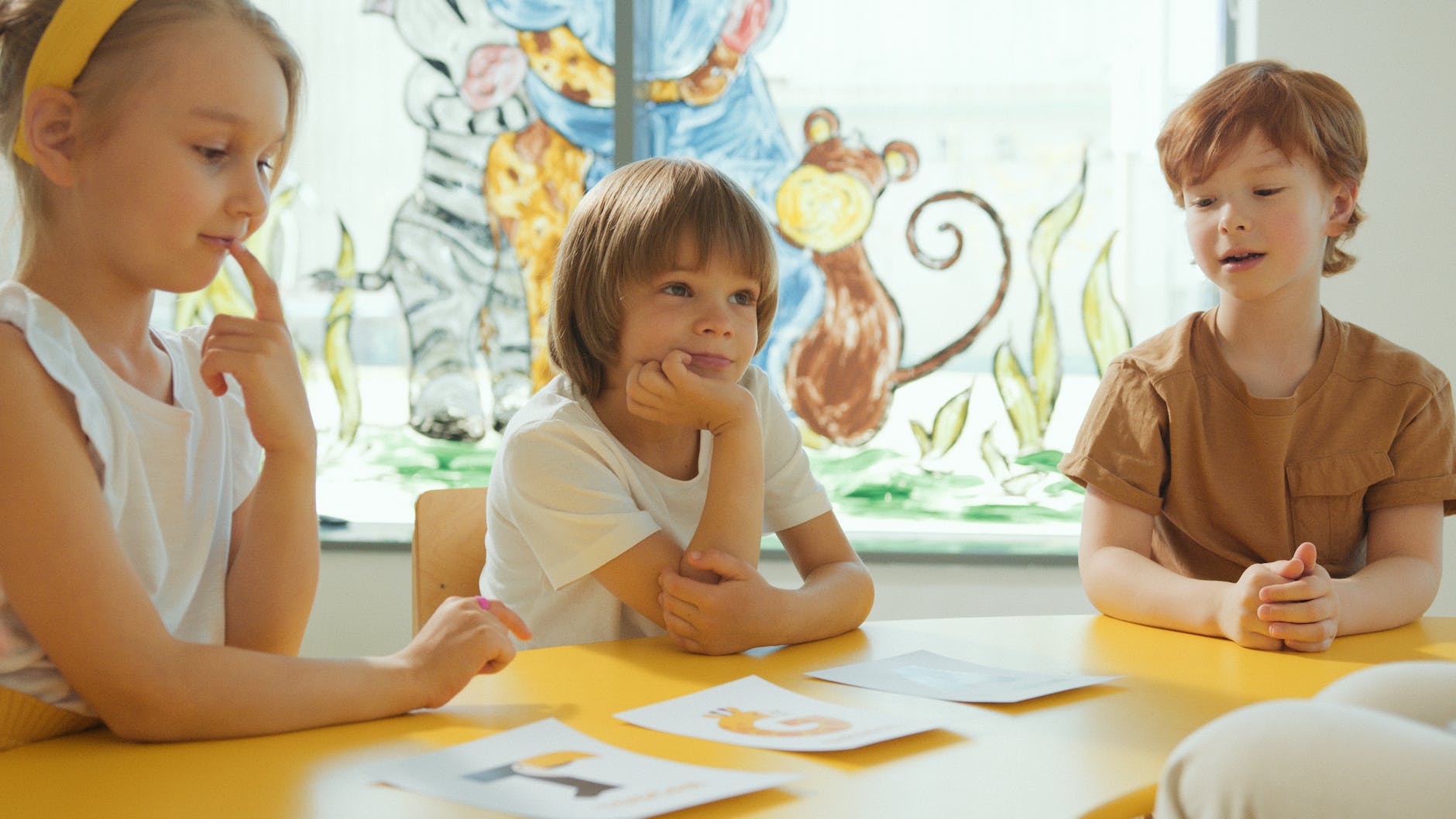
Cooperative learning that is highly effective in helping all students to master rigorous grade level standards is constructed so that students are working together to ensure each one learns and masters the content that has been initially presented by the teacher. Groups are constructed heterogeneously with high to low achievers. In the group, the learning is constructed around succeeding as a team and can only happen when each individual in the group is learning and mastering the content. Everyone works together to ensure everyone is learning, explaining ideas, checking everyone’s understanding, helping each other practice and share their thinking, and so on.
Despite its power, the instructional tool of carefully constructed cooperative learning has not been regularly used in classrooms across our country. It is very difficult to teach the same grade level standards to a group of students that vary widely in their previous learning, interests, and abilities. It has been the norm in our education system to address this difficulty by grouping students into groups such as the bottom, middle, and top reading group or grouping them into classes of basic math, grade level math, and advanced math. These groupings perpetuate the inequities in our schools with some children mastering rigorous grade level standards while others continue to work below grade level with the gap widening every year rather than closing.
However, properly constructed cooperative learning supports the learning of all students, across a range of abilities, in a classroom. Some educators believe that cooperative learning is being used when students are put into small groups to work together. However, just working in a group is not cooperative learning and often degrades into one student doing all the learning while the others ride on their coattails. This is group work. It is not cooperative learning and results in some students learning and others coasting. It does not result in all students mastering rigorous grade level standards. This phenomenon is what often is happening when parents object to the use of so called cooperative learning as they feel their child is doing all the work while the rest of the students are coasting.
Cooperative learning must include the following structures to ensure high effectiveness:
- A group goal or aim that can only be achieved when everyone in the group is learning.
- Individual accountability (Groups are recognized based on all the members learning and individual grades are based on individual/independent assessment).
- Carefully structured interactions among the group members.
- Team celebration when the group goal/aim is reached.
Educators that use cooperative learning effectively teach students specific skills for working together such as: listening when others talk, offering constructive comments on other’s ideas, understanding other’s points of view, encouraging others, explaining their thinking, promoting equal participation, and disagreeing politely. These educators take the time to teach students the skills that they need for their individual success and their group’s success. They carefully teach these skills one at a time and then reinforce and expand upon the skills throughout the school year.
Becoming a master at using cooperative learning does not happen in teacher preparation programs. Rather, schools that use cooperative learning to increase student achievement across the board spend time improving their educators’ skills through ongoing professional development and teacher learning teams. Resources to help educators implement and/or refine the use of cooperative learning as a powerful tool for equity include:
- The Success for All Foundation
- Gillies, R. M. (2007), Cooperative learning: Integration theory and practice. Sage Publications.
- Jacobs, G. M., Power, M. A., Inn, L. W. (2002). The teacher’s sourcebook for cooperative learning: Practical techniques, basic principles, and frequently asked questions. Corwin Press,
- Jolliffe, W. (2007), Cooperative learning in the classroom: Putting it into practice. Paul Chapman Publishing.
- Slavin, R. E. (1995), Cooperative learning: Second edition. Allyn and Bacon.
- Slavin, R. (2010), “Co-operative learning: what makes group-work work?”, in Dumont, H., Istance, D. and Benavides F. (eds.), The Nature of Learning: Using Research to Inspire Practice, OECD Publishing, Paris, https://doi.org/10.1787/9789264086487-9-en.
This Part I of the post Cooperative Learning: A Powerful Tool for Equity has addressed what true cooperative learning entails. Part II will address how cooperative learning changes the structures in classrooms and schools so that all students are learning to high levels.
This blog is written by Dr. GwenCarol Holmes, a long-time educator and passionate advocate for all students mastering rigorous standards
References
Baye, A., Lake, C., Inns, A. & Slaving, R. E. (2019). Effective reading programs for secondary students. Reading Research Quarterly, 54(2), 133-166.
Boykin, A. W. & Noguera P. (2011). Creating the opportunity to learn: Moving from research to practice to close the achievement gap. ASCD.
Gillies, R. M. (2007), Cooperative learning: Integration theory and practice. Sage Publications.
Pellegrini, M., Neitzel, A., Lake, C., & Slavin, R. E. (2021). Effective programs in elementary mathematics: A best evidence synthesis. AREA Open 7(1), 1-29.
Rohrbeck, C. A., Ginsburg-Block, M. D., Fantuzzo, J. W., & Miller, T. R. (2003). Peer-assisted learning interventions with elementary students: A meta-analytic review. Journal of Educational Psychology, 95(2), 240-257.
Slavin, R. E. (1995), Cooperative learning: Second edition. Allyn and Bacon.
Slavin, R. E., Lake, C., Chambers, B., Cheung, A. & Davis, S. (2009). Effective reading programs for the elementary grades: A best-evidence synthesis. Review of Educational Research, 79(4), 1391-1466.
Slavin, R. E., Lake, C., & Groff, C. (2009). Effective programs in middle and high school mathematics: A best evidence synthesis. Review of Education Research, 79(2), 839-911.