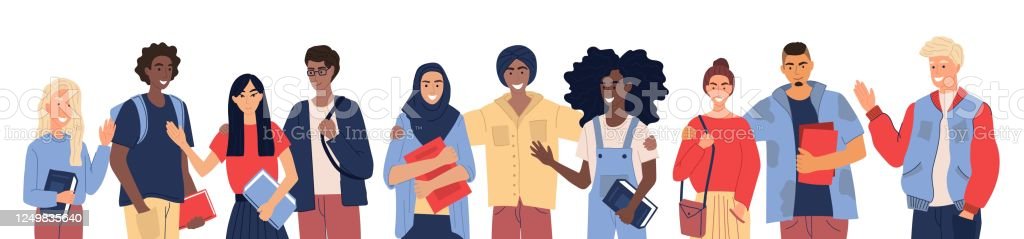

Are you an educator asking now what after the most recent presidential election? As educators, we work relentlessly day after day to ensure all students master rigorous standards and graduate high school college and/or career ready.
Providing students whatever it takes so that all students achieve at high levels is not for the faint of heart. Many of our students face multiple hurdles to success: poverty; lack of acceptance due to their race or nationality or the way they express themselves; lack of physical and/or mental health care; learning to speak, read and write English while simultaneously learning rigorous content; handling the pressures of going to school while also working or babysitting siblings to help the family make ends meet; lack of technology and connectivity. . . The list goes on and on.
In order to ensure each child meets our states’ rigorous standards, but we must remove or find ways around the hurdles our students face due to their life circumstances and of no fault of their own. If not addressed, these hurdles reduce the ability of students to focus on the learning needed to master the standards.
If you are like me, you were hoping for a new administration that would seek to be inclusive of all peoples. An administration that worked to create a system where children and their families have the supports needed to work their way into the middle class through home ownership, excellent child care while parents worked, and improved health care. You were hoping for a new administration that worked tirelessly to do away with the marginalization of whole swaths of people, including their children.
However, that new administration we hoped for is not to be at this time. The new administration that is preparing to take office is one that has repeatedly shared its distain for different groups of people: creating more divisiveness and reinforcing the marginalization of groups of people. So, what do we do as educators as we face this incoming administration?
We do not throw in the towel. We do what educators have always done. Through the years educators have step by step worked to continuously improve a system of education so that all students achieve at high levels regardless of who they are or where they come from. Current educators continue the work of those came before us. We redesign our classrooms and schools to be places of education where all children succeed at high levels. We continue the work in our little corner of this great country while trusting educators all across the country are doing the same.
While I believe the idea of a free public education for all students is one of America’s greatest gifts to the world, our education system was and continues to be a work in progress. As a country we started with no formalized public education despite both George Washington and Thomas Jefferson calling for the creation of an education system for a “better-educated populace.” (Thomas Jefferson, Bill 79: A Bill for the More General Diffusion of Knowledge. George Washington, Farewell Adress of 1796.).
Over the years a more structured system of public education began to take place starting with the development of free elementary schools. Horace Mann was central to the development of a public education system helping to establish a state board of education for Massachusetts, public high schools, securing tax funding for education, keeping religious education separate from public schools and establishing teacher-training programs. Mann’s ideas of a common school was that school was open to all classes in order to ensure social and national unity (Massachusetts Board of Education, 1849).
Even with this progress, the reality of schools in America was they did not serve all children. They primarily served white males. Over the years there have been many hard-fought battles to expand the group of children served by our schools as we inch closer and closer to truly serving all children with equity. The first two hundred plus years of debate and development of a public education system in the United States saw a continuous focus on widening the net to include more and more children: not just the white males of privilege, but all children regardless of gender, race, economic status, disability or primary language.
Our educational system has come a long way towards including all children. However, the outcomes for our children still vary widely. Some of our children master the states’ standards which are set as expectations for all students. Others do not. Some of our children graduate high school well prepared for college and/or career. Others do not. Therefore, we still have work to do.
The marginalized students in our country who receive a lessor education are depending on us to continue the fight to create an education system that provides whatever it takes for each child to master the educational standards set forth by the states. That is equity. Providing whatever it takes for students to learn actually happens at the school level. It would be great to have leadership and support from state and the federal governments. However, if we do not, it does not stop us from working to provide equity anyway.
Anyone who doubts educators’ abilities to act to improve the education of all children despite difficult circumstance need only look to the current state of education in Oklahoma. Districts and schools across the state are standing up to their state superintendent on issues that marginalize some students. Schools are refusing to modify their curriculum to incorporate the Bible into lesson plans, to check the immigration status of students, to follow the state’s superintendent anti-LGBTQ+ policies, to show a video of him praying, and to remove certain books from their school libraries. While pushing back on these issues can be tiring and time consuming to school and district leaders, they do it anyway because these mandates do not serve the purpose of educating all students to high levels.
Our children are depending on us to provide them with a rigorous education that allows them to flourish and become the future citizens our country needs to continue to be great. Our children’s futures are in our hands. Our country’s futuer is in our hands.
This blog is written by Dr. GwenCarol Holmes, a long-time educator and passionate advocate for all students mastering rigorous standards.